


Automate business processes appears as an uncomplicated task until one gets into the metrics. The majority of organisations declare that they have used one of the many forms of AI automation. However, very few of them implement it on a larger scale.
The gap is more important than any sensational statistic out there. In this guide, we review what automation is, how much benefit it brings, and how it should be applied correctly, as well as mistakes that prevent successful project implementation.
What Business Process Automation Actually Means
In other words, business process automation refers to the use of technology or software to perform job functions that humans used to handle manually. The idea is not only about speeding things up – it is about improving reliability.

There are basically three different levels in this regard. The first level is simple business process automation, which relies on the “if-this-then-that” logic. Robotic process automation (or RPA) mimics the function of a person’s clicks and data entry. Finally, there is AI-powered automation, which can even make decisions.
Read Also : Broken Keyboard Grok Answer
Core Benefits That Drive Adoption
Companies that automate their processes often expect four main outcomes: lower numbers of human errors, better time performance, employees’ hours that are now unencumbered with tasks, and higher quality of output.
According to Grand View Research statistics as seen in Ringly.io, 88% of businesses are using AI automation solutions in at least one field of their business. Still, the number of companies capable of deploying this innovation remains low. Gartner’s 2026 Hype Cycle for Agentic AI rates only 17% of firms who manage to apply AI agents in practice although over 60% have plans to do so in the next couple of years.
This serious discrepancy between the intentions to adopt and real usage proves the fact that optimization requires thorough planning rather than just purchasing some software.
Implementation Strategies That Work
Map Before You Automate
First, variety a record of your prevailing workflow and include every omission and edge case in it. If you gambol this step, you could end up automating a broken workflow in its place of preservative.
A communal pitfall worth revealing is the fact that automating a messy progression only makes the mess chancefaster. This means that documenting the existing work process is not just some humdrum bureaucratic hassle, it is the basis upon which everything else stands.
Define Objectives With Numbers
Before introducing your project, start a measurable goal. Good samples embrace hours saved per week, error lessening, or improvement time enhancements.
If you set imprecise goals like “developed more efficiently”, you will not have everything to quantity your progress in contradiction of. A detailed goal gives your team approximately concrete to attempt for.
Start With High-Volume, Rule-Based Processes
High-volume, expected tasks like invoice meting out or lead routing transport the clearest payoff. They’re also the lowest-risk dwelling to start, since blunders here are easy to fasten and fix.
Here’s a hurried way to spot a good opening candidate:
- The task repeats dozens or hundreds of times per week
- The rules rarely change
- Errors are easy to detect and costly to ignore
Phase the Rollout
Test your automation on one lineup or one business development first. Observe the products and then inflate once you’ve deep-rooted its success.
Fulfilling automation across the establishment at the same time elevations the risk theatrically. A gradual attitude allows you to ascertain and solve problems while they stay still small and convenient.
Monitor, Measure, Adjust
In the course of time, automated systems became ineffective because of the inconsistency of upstream information or the business rules. What initially went perfectly well on the first day will turn out to be useless on month six.
Make it a topic to implement systematic
review rotations from the very foundation. Workflow automation is not something one can simply complete and forget about; rather, it can be still called unfinished through a dedicated conservation effort.
AI-Powered Qualification and Automation Technology
Modern-day AI companies perform tasks that necessitate human beings making the necessary judgments. Examples include defining the score for a sales lead or listing support coupons.

This progress is crucial as it transitions automations from merely being rule-based to systems that make executive choices. However, it creates a difficulty in that the AI categorization system is required to be regularly monitored and modified so that it avoids becoming biased.
According to specialists in this field, AI elucidations should be watched in the undistinguishable way we view junior employees: they need dependable observations in order to succeed.
Choosing a Service Model: Build In-House vs. Partner with a Provider
Preference the right approach be contingent heavily on your team’s size and mechanical well-being level. Here’s how the main options mountain up.
| Approach | Best For | Trade-Off |
| No-code tools (Zapier, Make, Power Automate) | Small teams, simple workflows | Limited scalability for complex, cross-system processes |
| Enterprise RPA platforms (UiPath, Automation Anywhere) | Large, rule-heavy, high-volume processes | Higher cost and longer setup time |
| Outsourced business automation services | Teams without in-house technical capacity | Less direct control, ongoing vendor dependency |
Use case: a 15-person marketing agency with no in-house developer probably gets more value from a no-code tool than from a six-figure RPA platform built for enterprise scale.
Connecting Automation Across Departments
The greatest benefits of automation are gained when it involves the handoffs between teams, not simply in automating one task in isolation. The transition from marketing to sales and from sales to fulfillment are two typical examples.

CRM systems are commonly at the heart of these handoffs. When a lead moves automatically from marketing to sales, everyone has the right data in front of them, thus eliminating the need for any manual data entry or the more inefficient ways of collecting missing information.
Choosing the Right Automation Tools
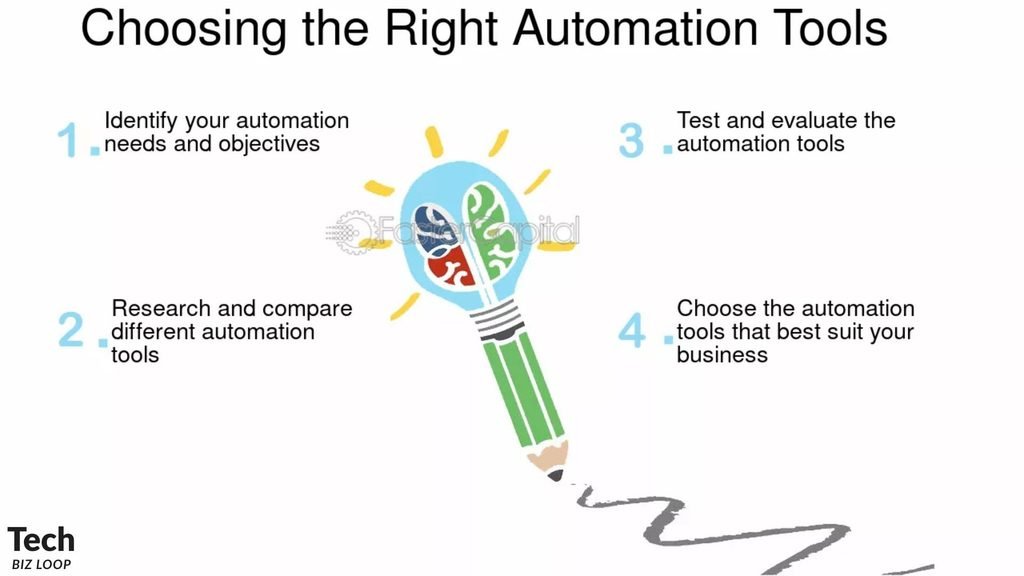
Always keep in mind the level of complexity of the automation tool must match the actual level of complexity of the process being automated. There is no point in using advanced enterprise RPA solutions for automating three-step email sequences and free Zapier plans for automating company-wide data transfer processes.
The majority of automation tools can be categorized into three categories. No-code platforms like Zapier, Make, and n8n are used for automation of straightforward processes. RPA platforms are employed to automate complex enterprise processes based on rules. AI-agent platforms are used to automate processes that require making arbitrary judgments and thereby do not follow strict rules.
Measuring Automation ROI
It’s crucial to monitor three factors objectively: time saved, error rate before and after implementation, and cost per transaction. These should then be compared to the subscription or installation costs of your software.
The return on investment for automating does not follow a common pattern and as such does not lend itself to any form of average. Rather than taking a general percentage found online into consideration, you should quantify your own variables instead.
Common Mistakes to Avoid
There are certain mistakes that automatically lead to failure of automation projects. You should be wary of these mistakes before you allocate any budget to your automation project. The first mistake is automating a process that is either broken or has not been documented.
The second mistake is skipping the pilot phase and going straight to deployment in all areas. The lack of monitoring means slow failures will go unnoticed after implementation. Finally, it is a common mistake to choose a tool based on baloney rather than on the actual complexity of the process involved.
Getting Started: A Practical First Step
Choose the single most repetitive, high-volume manual process your team is currently performing. Outline it thoroughly with all the exceptions. Automate that one process and then go on to the next one.
Important: Don’t start automating everything. One successful automation gives you the necessary experience and confidence to start the next one.
Pros and Cons of Business Process Automation
Using workflow automation can definitely boost productivity and consistency once it has been implemented successfully. It also gives your employees time for realistic tasks that require human input.
However, this benefit is diminished when teams skip the planning phase. When inappropriate employment occurs, new blunders are made, employees convert fatefully and the original resolve of saving expenditures concluded mechanization is simply challenged.
Frequently Asked Questions
What does it mean to automate business processes? In other disputes, it refers to using unalike means like software, stringent developments or the use of AI which complete repetitive tasks unremittingly without lacking human input or determination.
Is business process automation worth it for small businesses? Yes, robotic process automation starts small. The massive value of robotic process automation comes with the completion of a single task efficiently without requiring much investment.
What’s the difference between RPA and AI automation? It is important to remember that robotic process automation applies basic rules in its functioning as opposed to AI based automation which is capable of making decisions, for instance, scoring a prospective customer or distributing complaints based on the situation.
How long does it take to see automation ROI?It varies with the system being used, but in the majority of cases, teams see the benefits in terms of time savings within the first couple of months of starting a well-planned pilot project.
What’s the biggest risk when automating a process? Automating a bad process or a process that is not documented. What this does is it makes the existing problems move faster rather than resolve them.
Conclusion
If you have successfully carried out automation in business processes, then you are promised a real achievement of improvement in speed, efficiency, and productivity of your company. If done wrongly, you may even face a worsening of the current problems only quicker.
Flinch from the little things, and ensure authentic measuring of outcomes. It is imperative to treat BPM as an unremitting activity, not as a one-time occurrence.











Leave a Reply