

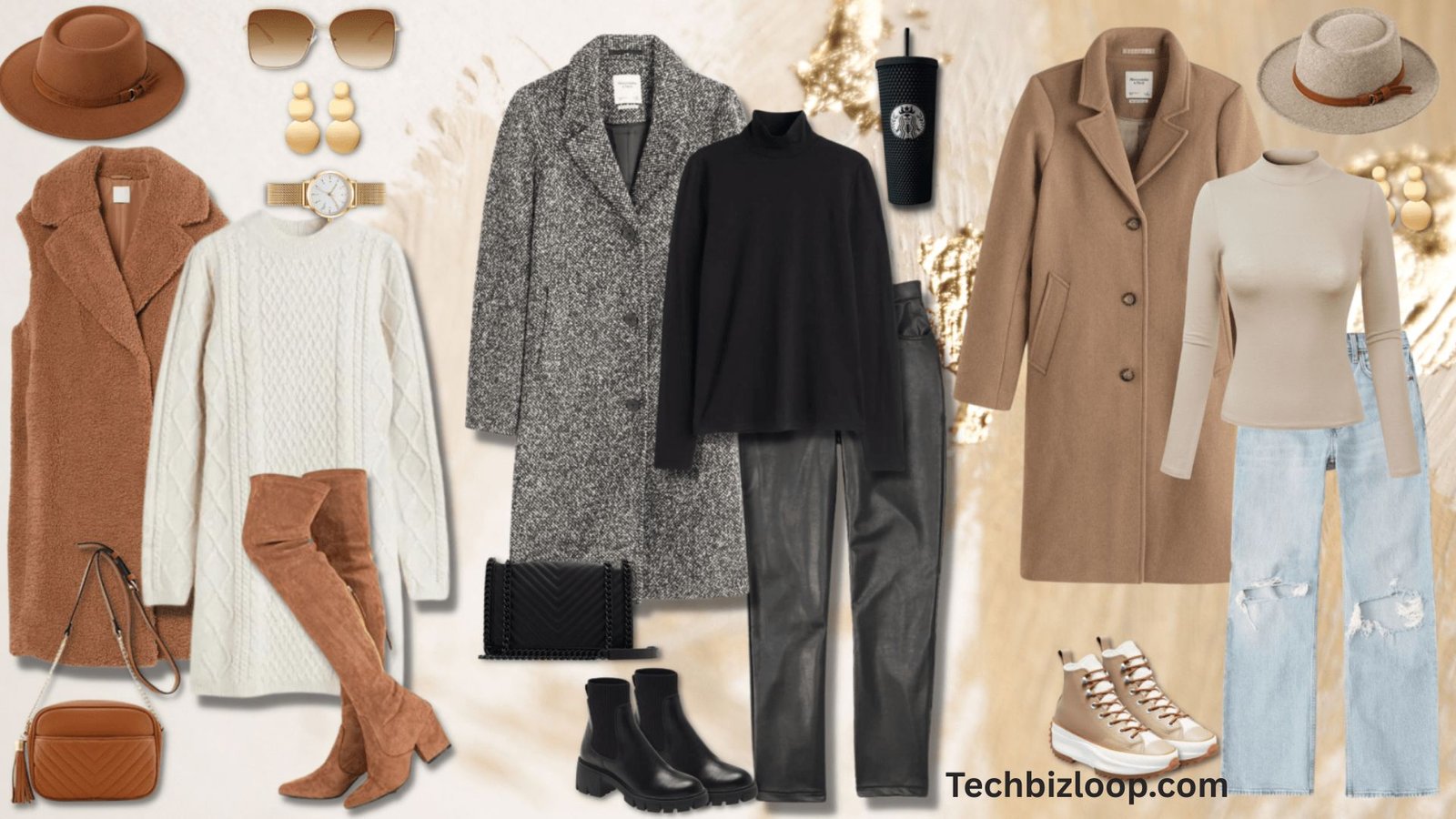
What to wear today Selecting a dress for a specific day should not be demanding, and shouldn’t generate a mess of garments being terrified away. The only object somebody has to do is to contemplate the infection, wind, and pledges for the daylight.
In this director, you will find the infection scale, the basic performance
for layering the dresses, and the dissimilar styles appropriate for different junctures.
What To Wear at Each Temperature

The preliminary temperature will afford you with the first suggestions of what clothes to apparel. The chart above directs how to dress bestowing to the high temperature.
Then check the weather prediction for the day and recognize the high and low heats, as well as the probabilities of rain. A temperature of 45 gradations in the pre-lunch may go as high as 65 gradations in the evening.
When indicating shoes and thumps, ruminate that wool socks and shoes stay suitable for heats lower than 50 progressions. Open shoes and thread socks work well in a macroclimate above 75 gradations.
Finally, families and elderly people necessitate extra layers of fashion as they often lose heat nearer, so a warm hat and sheathing would be good.
Read Also : Best AI Tools in 2026
Dress for Feels-Like, Not the Number

“Feels-like malaise” is the temperature fingered on the skin’s exterior. This term is used to prompt how much heat is knowledgeable. It takes into interpretation air temperature, clamminess, and the speed of the wind to exert out what sensations like temperature.
Throughout freezing weather, the wind promotes temperateness. The Countrywide Weather Provision provides a wind chill catalogue for air temperatures subordinate than or equal to 50° F and the airstream of smallest speed of 3 mph. Thus, if the infection is 40° F and the wind is wafting, it could give an impression like 30° F.
The hot weather suffers from humidity. High humidity limits sweat’s evaporating ability which makes it difficult for the body to cool down. The reason behind that is that 85° F in high humidity is worse than 85° F in less humid conditions.
These factors change comfort the most:
- Wind gusts, which strip heat from your skin
- Damp air and rain, which feel colder than dry air
- Direct sun, which warms you by several degrees
- Time of day, since mornings and evenings run cooler
Bandage suitably for the climate means read-through the feels-like construction in your weather app or service, rather than the definite malaise.
The type of drapery you wear can require a big bearing too. When warm, cogitate breathable stuff such as linen, unimportant cotton, and moisture-wicking stuff. For cold weather, choose wool, hustle, or down tailored. Avoid filament when it’s emotionless and wet, as it recollects moisture and types you unfriendly.
The Three-Layer System
The three-layer approach assigns a unique function to every garment. You can put on or take off such layers during the day. It is more effective than using a bulky coat only once.
The first layer is in touch with skin and removes moisture. The best fabrics used for that are Merino wool and synthetics. Cotton is acceptable in warm and dry conditions only.
The middle layer provides insulation. Any fleece, wool jumper, or thin puffer is suitable for that function. Choose the thickness according to the temperature in your environment.
The last layer protects from wind and humidity. This includes either a shell or coat. In case it is warm outside you may choose to leave it at home or carry it with you.
To give you a practical example, suppose we have a woman going to work who has to face 45 degrees on her way. She uses a Merino shirt, fleece sweater, and windproof jacket for her daily commute. During the train ride she has to take off her jacket, and at the office she has to leave her fleece in the office. Light layers of clothing can be quite handy in spring and autumn seasons. For example, using
Outfit Ideas for Every Occasion
The weather determines the layers you should wear, while the occasion decides the fashion style. These clothing combinations work in almost every weather condition. Just check the table when choosing your layers.
Work and Office
Office supplies need a neat appearance suitable for windy and chilly air conditioning. Use chinos with a collared shirt and a blazer. Just replace the blazer with a thin knit sweater if it gets too cool.
Casual Weekend
The outfits for the weekends must not be difficult to wear. Jeans, t-shirts, sneakers are the basic things. In spring an overshirt can be added, in fall – hoodies, and in winter – puffer jackets.
Date Night
The outfit for a date night must be semi-casual. Dark color jeans, fitted tops, and jackets may do for any night out. Nights are chillier, hence bring something warm along even if it was warm during the day.
Formal Events
The formal parties implying dress codes must be respected. Suit for men and midi dress for women is what would go for many weddings and dinners. Carry a wrap or coat for the way from parking to the restaurant.
Gym and Outdoor Activity
The outfit for sporting activities must be layered and allow sweat. As for the base layer, it needs to be wicking fabric and the shell layer must be a light windbreaker. It is better to dress 10 to 15 degrees higher than the actual temperature.
Travel Days
The outfit for travelling must be comfortable for hours. Wrinkle-proof trousers, soft t-shirt, and zippered jacket should help.
Quick Style Rules That Always Work
Stylish beats fashionable. A well-sized simplest item looks better than a modern garment that hangs or is bunched.
Wear one to three colors in one clothing combination and add one statement item. Own at least a few neutral basics: a white T-shirt, dark jeans, jacket, and sleek shoes.
Research-Based Insights
Since 2001, when the National Weather Service and Environment Canada embraced the formula, the wind chill index has been a primary guideline for forecasts in the U.S. and Canada. The index is based on data obtained from test subjects in cold wind tunnels.
Heat is equally important. Extreme heat is regarded by the National Weather Service as one of the most dangerous weather hazards, and acute humidity worsens the danger. The use of breathable and loose clothing enhances the effectiveness of the human body in losing heat.
Expert Opinion
In practical matters, most individuals feel either warm or cold simply because they dress accordingly for the morning. For instance, they go out of their homes at 7 a.m. in a thick coat and wear it all day long.
A better way is to dress adequately for midday and wear one layer on top.
Pros and Cons
Layering makes sense. You can adjust to the environment, you can wear things you already have, and you won’t need to take as many clothes with you. It gives you a well-structured appearance.
However, it also has its disadvantages. You need to carry more garments, and large layers are often uncomfortable. One thick coat is a lot easier, but it makes you hot inside.
Layers vs. One Heavy Coat

The fact that layers provide control while a thick coat provides convenience is well illustrated in this case. If going just to the car, a warm coat will do. But for a whole day ahead with different activities like being outside, taking the train, or attending a class—layers would be the best choice.
Use Cases and Examples
Consider a student experiencing 55°F with a damp wind. She has her jeans on and a T-shirt, a warm pullover, and a light rain coat. She is warm during the outside break and cool during classes.
Now let’s look at a runner at 35°F. He is dressed with a thermal base layer, a thin intermediate layer, gloves, and a hat. He is freezing a little bit at first, but he starts feeling comfortable only after ten minutes.
Pro Tips for What to Wear Today
Selecting what to wear begins the previous night. Review the weather forecast for the next day and prepare clothes to wear in advance. It will help you simplify your choice and save time later.
Buy a chic handbag, add a scarf, gloves, or a compact rain jacket. You may also want to give new outfits a try in the comfort of your own home.
Common Mistakes When Choosing What to Wear
These errors cause most weather regrets:
- Checking only the current temperature, not the low and high
- Skipping wind and humidity
- Wearing cotton for wet or sweaty activities
- Choosing tight layers that block airflow
- Leaving out a hat and gloves in cold weather
Frequently Asked Questions
What should I wear today based on the weather?
Refer to the climate chart and yield into justification the effect of airstream, rain, and sun. If you are not sure, purely wear one supplementary deposit that can be easily unconcerned if obligatory.
Should I dress for the temperature now or the daily high?
Do both. Proposal for noontime and convey the additional coating for the cold pre-lunch and late sundown.
Why does the same temperature feel different in different places?
Dampness, wind, sun, and elevation all disturb how hot / cold it impressions are. Your behaviors also obligate a consequence since the inhabitants are hand-me-down to the microclimate.
What is the three-layer system?
A dishonorable layer that enthralls sweat, a mid-layer that affords warmth, and an outer coating that safeguards from wind and rain. Conditional on the environments, you put on or yield off deposits.
Should I wear a coat if it’s sunny but cold?
Normally speaking, yes. The sun does not really disturb the malaise of the outside air, and wind can infiltrate any clothes. Excellent coats you canister take off straightforwardly.
From General Guidance to Your Actual Clothes

Convert your guide into an unremarkable routine in four laid-back steps. The first period is read-through the weather for anticyclones and depressions, wind and rain. Then, categorize which fever band you will bull.
Footstep three is to find fashion that will avail as your base-layer, middle-layer, and outer-layer expending pieces from your contemporary assemblage. The last step consists of combining the outfit recipe that suits your deeds.
You can then advance to conduct a basic gear audit. Unite your clothing items by illness band and identify areas somewhere you do not have wide-ranging coverage. The straightforward apprentice kit should comprise five indispensable items: a t-shirt, a jumper, an inconsequential covering, an earnest coat, and one pair of adaptable khakis.
Conclusion
Choosing clothes becomes a simple task when you stick to a systematic approach. Understand the current temperature and establish three layers.
Check tomorrow’s weather forecast beforehand. Get dressed accordingly to prepare yourself for any situation.





Leave a Reply